
The north of Mauritius
The north of Mauritius: lively beaches, offshore islands and a relaxed lifestyle
 The essentials in a few words
The north of Mauritius is the sunniest and most lively region of the island.
People come here for its fine sandy beaches — Mont Choisy, Trou aux Biches, Pereybère —, its calm lagoon ideal for swimming and snorkeling, and its lively atmosphere around Grand Baie, the heart of shops, restaurants and nightlife.
It is also the starting point for catamaran cruises to the northern islands, such as Coin de Mire.
Inland, the Pamplemousses Botanical Garden, the Sugar Adventure Museum, the Château de Labourdonnais and the Triolet Temple complete the discovery.
Easily accessible and well-equipped, the north is suitable for families, couples, and active travellers alike.
For many travelers, the north is their first image of Mauritius: long stretches of light sand beaches, a calm and luminous lagoon, lively seaside villages, and, on the horizon, the jagged silhouette of islets scattered across the water. It's the sunniest, most vibrant, and most livable region of the island—the one with the highest concentration of public beaches, restaurants, shops, and excursions all departing from a single location.
But the north is more than just its coastline. Behind the shores lies a hinterland where you'll find one of the world's most beautiful tropical botanical gardens, old colonial mansions, a sugar museum, and the island's largest Hindu temple. This overview will help you understand what makes the north unique, what you can see and do there, and how to enjoy it according to your preferences.
Summary
- The north in brief: Sun, lagoon and lively atmosphere
- Grand Baie and Pereybère, the living heart of the north
- The most beautiful beaches in the north
- Cap Malheureux and the northern point
- The northern islands
- Sea trips and water sports
- The Hinterland: gardens, sugar and heritage
- Practical tips for visiting the north
- Frequently asked Questions
- Photos
The north in brief: Sun, lagoon and lively atmosphere
Geography largely explains the character of the north. Sheltered by the central highlands and less exposed to the humid trade winds than the east, this region is one of the driest and sunniest on the island. The terrain is flat, the coast is largely protected by the coral reef, and the lagoon is particularly calm for long stretches—all conditions that have made the north the cradle of Mauritian beach tourism.
This long-standing tradition is reflected today in a density of amenities unmatched anywhere else on the island: hotels of all categories, residences, a variety of restaurants, supermarkets, shopping centers, rental agencies, and activity providers. It is also the region with the best connections to the capital. Port LouisLocated just to the southwest, it makes a convenient base for exploring the region. The downside of this popularity is higher visitor numbers: the north is lively and sometimes bustling, in contrast to the more tranquil and wild south.
Finally, it's a region steeped in history. It was in the north of the island that British troops landed in 1810, during the campaign that would bring the island under British rule—an episode recounted by our history of Mauritius.
Grand Baie and Pereybère, the living heart of the north
Big Bay it is the true nerve center of the north. A former fishing village that has become the island's most popular resort, the town is built around a sheltered bay where sailboats and excursion boats are moored. It boasts the highest concentration of restaurants, bars, shops, and nightlife in Mauritius, as well as modern shopping centers. It is also the main departure point for sea excursions, catamaran cruises, and water sports.
Grand Baie is not just a place for seaside pleasures: the town also boasts an artistic scene, with several galleries and workshops, reflecting the world of... painter Michel DegavThe public beach of Grand Baie, more modest than the large neighboring beaches, is mainly suitable for quiet swimming and observing the activity of the anchorage.
A few minutes to the north, Pereybere it offers a small but very popular public beach, lined with shops and casual restaurants. Its shallow waters and friendly atmosphere make it one of the most popular spots in the north, particularly appreciated for an end-of-day swim or a snorkeling session near the shore.
The most beautiful beaches in the north
The north boasts some of the island's most renowned beaches, several of which are consistently among visitors' favorites. All offer calm lagoons and public access.
Mont Choisy
With its long, sandy curve bordered by casuarina trees, Mont Choisy it is one of the largest beaches in the north. There is ample space, plenty of shade, and a family-friendly atmosphere, especially on weekends when Mauritians come to picnic. Its size makes it easy to find a quieter spot, even in peak season.
Trou aux Biches
Trou aux Biches it is regularly cited among the most beautiful beaches on the island, and In The indian ocean. its shallow lagoon, with its remarkable turquoise waters, and its nearby reef make it a prime spot for swimming and snorkeling. It is also one of the major scuba diving centers in the north.
Pointe aux Piments, Bain Bœuf and Balaclava
Further to the northwest, Pointe aux Chilis it lines up small coves and hotels in a peaceful setting. Bain Bœuf, far north, seduced by its direct view of the Coin de Mire and its relaxed atmosphere. BalaclavaFinally, it combines beach and heritage, near the historical remains of Turtle Bay.
Calodyne and the northeast
Towards the northeastern tip, Calodyne and the surroundings of Grand Gaube offer a quieter and more authentic side of the coastline, between fishing villages and piers for some excursions to the islands.
Cap Malheureux and the northern point
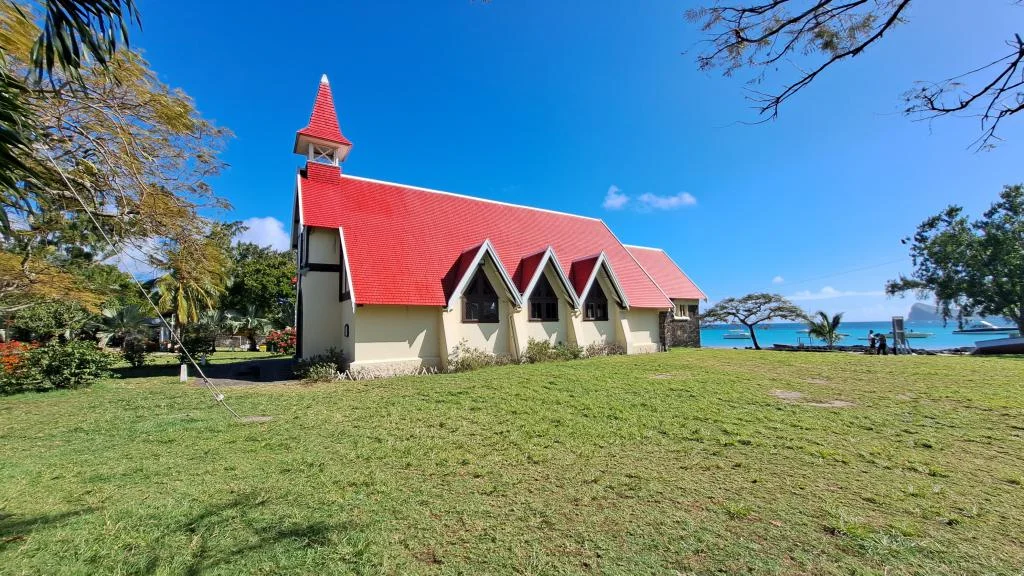
At the very tip of the island, Cape Unhappy it is one of the most photographed sites In Mauritius. its small Church, Notre-Dame auxiliatrice, recognizable by its bright red roof, stands out against the blue of the lagoon and the silhouette of the northern islands in The background. it is a peaceful place, ideal for a contemplative break, and an excellent viewpoint overlooking Coin de Mire.
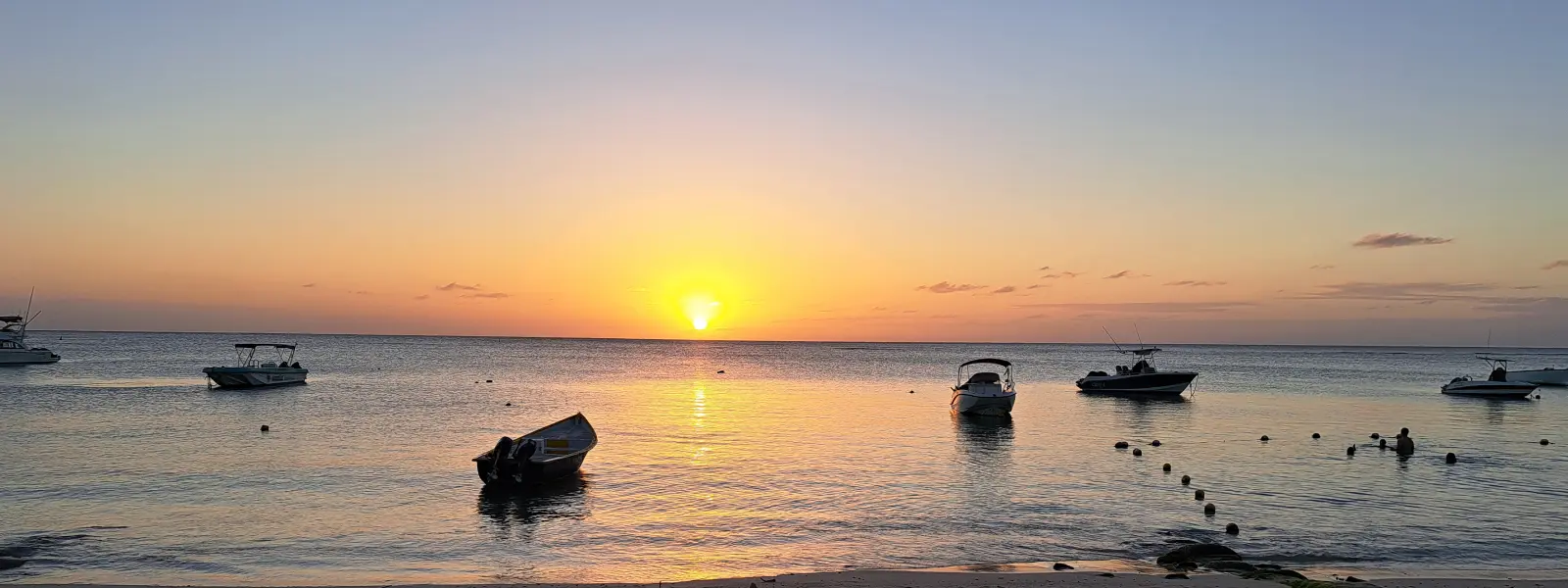
The northern tip also marks the transition between the drier west coast, ideal for sunsets, and the windier northeast coast. The area is perfect for the end of the day: the low-angled light is superb, and it's easy to see why this part of the island is associated with some of the most beautiful island sunsets.
The northern islands
One of the great attractions of the north lies in its string of uninhabited islands visible from the coast, which make for an unmissable boat trip. Our dedicated guide details the discovery of three northern islands, but each one has its own personality.
THE Corner of the SightWith its massive shape and distinctive cliff, it is the visual landmark of the entire north. A nature reserve, it cannot be visited on land but can be admired during cruises, which approach its fish-filled waters. Nearby are Flat Island and...Gabriel Island form a popular area for catamaran excursions, with their translucent lagoon ideal for swimming and snorkeling. More fragile and strictly protected, theRound Island it is home to endemic species that can be found nowhere else: it is a conservation area and not a tourist area, but it illustrates the natural richness of this sector.
These four islands gaze at each other from the open sea. At the other end of the north, towards the northeastern tip, an island, on the contrary, is accessed from within: Amber Island. Located just a few hundred meters from the shore, off the coast of Goodlands, it is the largest of the Mauritian islets, approximately 147 hectares of woodland and mangroves crisscrossed by a maze of channels. The best way to reach it is by kayak, from Bain de Rosnay beach, and that's precisely the appeal: you paddle under tunnels of mangroves, alongside aerial roots, and through water so clear you can follow the fish with your eyes. Mauritians call it their little Amazon, and they're not wrong.
The island also has a history. It was on its reefs that the Saint-Géran broke down during the night of August 17-18, 1744, a tragedy that inspired Bernardin de Saint-Pierre's novel Paul and Virginia The survivors took refuge there, and the shipwreck memorial today, it stands opposite, at poudre D'Or. once Inhabited by a few families, the island still retains ruins that can be explored on foot between paddle strokes. it Is now protected and has undergone extensive restoration work, including the removal of invasive species and the replanting of native trees. its landing Points are few and far Between: this is what has preserved it from mass tourism.
Just next door, Bernache Island is the exact opposite: tiny—you can walk around it in fifteen minutes—with a fine sandy beach to the south and a shallow lagoon with surprisingly warm water. It's the swimming and picnic stop for all kayak trips to Amber Island, and one of the few places in the north where you can spend a whole day without seeing many people.
Sea trips and water sports
The north is undoubtedly the island's best base for water activities. Catamaran cruises to the northern islands are the flagship excursion: a day at sea, swimming, snorkeling, and lunch on board, departing from Grand Baie or Trou aux Biches. The calm, clear lagoon is particularly well-suited to... snorkelingAccessible to all, often just a few meters from the shore.
Scuba diving enthusiasts will find several centers and numerous dive sites in the north, particularly around Trou aux Biches, including intentionally submerged wrecks. The area also offers excellent opportunities forobserve sea turtles in their environment, provided that the rules governing this approach are respected. Kayaking, paddleboarding, waterskiing and deep-sea fishing complete the range of activities offered along this coast.
The Hinterland: gardens, sugar and heritage
Heading inland from the coast to the north holds some wonderful surprises. Just minutes from the beaches, the hinterland is home to some of the island's most important cultural and heritage sites.
THE pamplemousses Botanical GardenOne of the oldest tropical gardens in the Southern Hemisphere, it's a must-see: admire its famous giant water lilies, rare palm trees, and a world-renowned plant collection. Nearby is the museum of The sugar AdventureHoused in a former sugar factory, it vividly recounts the history of sugar and, through it, the history of the entire island.
A little further on, the Labourdonnais CastleA superb 19th-century colonial mansion surrounded by orchards can be visited, along with its rum distillery and restaurant. Finally, the village of Triolet, the largest on the island, is home to the Maheswarnath Temple, the largest Hindu temple in Mauritius, whose colorful gopurams bear witness to the deep Indian heritage in this region.
Practical tips for visiting the north
When to come. The north can be visited year-round. As one of the driest and sunniest regions, it remains pleasant even during the rainy season, from November to April. The southern winter, from May to October, is milder and windier, but never cold.
Move. The north is compact and well-connected. A rental car remains the most flexible way to explore beaches and the hinterland, but taxis and ride-hailing apps are easy to find, and proximity to the capital makes travel convenient.
Where to stay. This region offers the widest choice of accommodation, from small apartments to high-end hotels, with a high concentration around Grand Baie, Pereybère and Trou aux Biches. Our accommodation guide helps to target the package best suited to your stay.
A turnkey itinerary. To discover the north without any planning, our pamplemousses Garden circuit to Cap Malheureux offers a complete route linking the major sites of the region in one day.
Frequently asked questions about the north of Mauritius
What is the best beach in the north of Mauritius?
Trou aux Biches and Mont Choisy are among the most popular, the former for its turquoise lagoon and snorkeling, the latter for its long stretch of shaded sand. Pereybère is ideal for a lively swim near shops. The choice depends mainly on the atmosphere you're looking for.
Is the north a good choice for a first stay in Mauritius?
Yes. Thanks to its density of beaches, restaurants, shops and activities, and its proximity to the capital, the north is one of the most practical and versatile bases for a first trip, especially for families and travelers who like to have everything within easy reach.
What sea excursions are available from the north?
The catamaran cruise to the northern islands, including Coin de Mire, Île Plate, and Îlot Gabriel, is the flagship excursion. Snorkeling, scuba diving around Trou aux Biches, kayaking, and fishing round out the region's nautical offerings.
What is there to do in the north besides the Beach?
The hinterland offers the Pamplemousses Botanical Garden, the Sugar Adventure Museum, the Château de Labourdonnais, and the Triolet Temple. It's an excellent cultural and heritage complement to days spent at the beach.
Is the north suitable for those seeking peace and Quiet?
The Grand Baie area is lively, even bustling. For more tranquility while remaining in the north, it's best to choose the northeastern tip, around Calodyne and Grand Gaube, or the ends of the large beaches like Mont Choisy.




The information in this article is provided for guidance purposes only. The author and publisher accept no responsibility for the accuracy of the information provided. It is recommended that you verify the information directly with local operators or the relevant Mauritian authorities during your stay. See the Terms (Article 12).
(The photos you send will only be used to complete this page and will never be used commercially outside of this site without your permission)
To share photos of your vacation in Mauritius with your friends, family and colleagues, we offer to create for you a personalized and free page dedicated to your stay. You will then just need to send the address of this page, for example www.ilemaurice-im/vacancesdepierreetmarie, to those with whom you wish to share your photos.
Nothing could be simpler, click on the button below.
Info +:
Rent a car
Book hotel or villa
Buy a plane ticket
7 day Weather forecast
Bus routes: Click here
Your advertising on this page?
Want to display an ad for your business on this particular page (or elsewhere on the site)?
Please contact us in click here.
Contribute, improve this page
We want to provide the most relevant and complete information to internet users, so if you want to add something or modify this page (text, Photo, etc.), Or even report an error, do not hesitate to contact us by sending us an email to the following Address: contribuer@ilemaurice.im
(remember to clearly indicate the page concerned by your contribution)
(the photos sent will only be used to complete this page and will never be used commercially outside of this site without your consent)