
Markets and bazaars of Mauritius
Markets and bazaars of Mauritius: tradition, flavors and the art of living
 The essentials in a few words
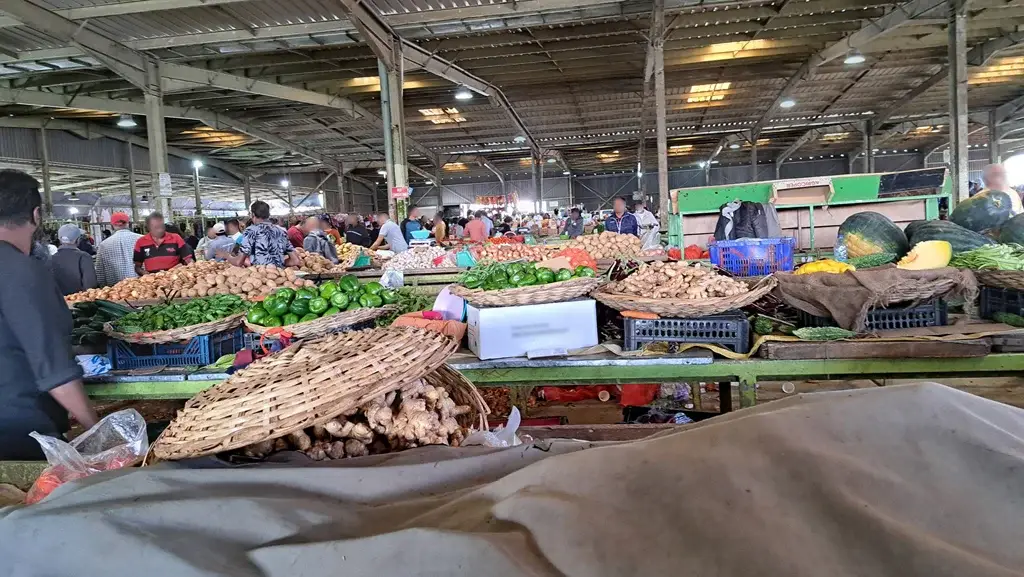
The markets and bazaars of Mauritius are the most vibrant expression of its cultural mix. There you will discover tropical fruits (mangoes, pineapples, lychees, jackfruit), fragrant spices, medicinal herbs, seafood, but also a variety of handicrafts: woven pandanus trees, wood carvings, colorful textiles, local jewelry.
On the food front, the markets are the kingdom of Mauritian street food — dholl puri, chili cakes, samosas, alouda, fried noodles.
Each major market has its own unique Atmosphere: Port-Louis for its historic building, Mahébourg for its authenticity, Flacq for its impressive size, Grand Baie for its touristy side.
A visit at dawn remains the best way to capture its full energy.
A glimpse of a dholl puri vendor's table at dawn, the aroma of spices wafting between the stalls, vendors calling out to passersby in creole, pyramids of tropical fruit, piles of woven pandanus Leaves: mauritian markets and bazaars concentrate the island's diverse soul into just a few Streets. far more than mere places of commerce, they are vibrant hubs of life where all the communities and all the flavors of mauritius Intersect.
Whether you're planning your trip or already there, this guide helps you understand how these places work, what you can find there, and how to make the most of them. To quickly locate the markets closest to your accommodation, a interactive map of all markets and bazaars in Mauritius is updated regularly.
Summary
- A diverse cultural heritage
- Market or bazaar: what's the difference?
- What can you find in a Mauritian market?
- The seasonal calendar of products
- Street food from the markets: a culinary journey
- Major markets not to be missed
- The art of bargaining and best practices
- When and how to visit
- Frequently Asked Questions
A diverse cultural heritage
The history of Mauritian markets is intertwined with the history of the island's settlement. As early as the 18th century, during the French period, barter areas were established around the quays of Port Louis. With the arrival of Indian indentured laborers from 1834 onwards, followed by Chinese merchants a few decades later, the bazaars became the meeting point for all the communities that now make up Mauritian society.
This human mosaic can still be seen today in the Market stalls: a spice vendor of indian origin stands next to a chinese shopkeeper and a creole greengrocer, and all converse In mauritian creole—the island's shared language. For those who want To discover mauritius beyond the hotels and beaches, the market remains undoubtedly the most authentic place. a Few words from mauritian creole are often enough to trigger a smile and a conversation.
The contributions of each community
Each major community on the island has contributed to the Mauritian commercial fabric, and these influences can be found in all the bazaars.
- The Indian Heritage the most visible aspect is undoubtedly the pyramids of spices, "masala" blends prepared to order, medicinal herbs ("local herbal teas"), and iconic street food such as dholl puri, samosas, biryani, and faratas. The first indentured laborers arrived in 1834, and their descendants now represent the majority of the population.
- The Chinese contribution its history dates back to the 1860s with the arrival of the first merchants. The "Chinese shops" (neighborhood grocery stores) long structured local commerce. In terms of cuisine, fried noodles, upside-down bowls, and numerous pastries bear their mark.
- The Creole heritage, originating from the African and Malagasy populations brought to Mauritius during slavery, can be found in the rougails, the achards, the curries of everyday life, and in the whole art of living in the market: the generosity of the stalls, the bursts of voices, the humor of the vendors.
- The European contributionFrench and then British influence is evident in pastries (Neapolitan pastries, potato cakes), in certain dairy products and in the commercial structure of covered bazaars, inherited from the model of European market halls.
Market or bazaar: what's the difference?
In Mauritius, the two words are used side-by-side and sometimes confused, but a distinction in usage exists. bazaar a bazaar traditionally refers to a covered and permanent market, often housed in an old building, where a wide variety of products can be found: food, textiles, crafts, and everyday items. The Port Louis bazaar is the most emblematic example.
THE walkThe term "market" more readily refers to an open-air or semi-covered market, sometimes held weekly, focusing primarily on fresh produce: fruits, vegetables, fish, and meat. "Fairs" or itinerant markets—which move from village to village daily—also fall into this category. In practice, Mauritians use both terms interchangeably, and visitors don't need to worry about the distinction: all offer the same immersive sensory experience.
What can you find in a Mauritian market?
The offerings of Mauritian markets reflect the island's agricultural and cultural richness. A few major product categories can be found on most stalls.
Tropical fruits
Depending on the season, you'll find Victoria pineapples, juicy mangoes (more than a dozen local varieties), lychees in bunches, papayas, jackfruit, passion fruit, longans, or even soursop. Vendors will often offer you a taste before you buy—a custom that is both commercial and hospitable.
Spices and herbs
Turmeric, cardamom, cinnamon, cloves, Madagascar vanilla, curry blends ("masala"): the spice stalls are one of the major visual and olfactory attractions of the markets. Nearby, vendors of medicinal herbs ("tisanes péyi") offer traditional Creole remedies passed down through generations.
Seafood
Lagoon fish (captain, wrasse, sea bream), octopus, squid, crabs: the fishermen's stalls are particularly lively early in the morning, when the day's catch arrives. Mahébourg and Port-Louis are renowned for their seafood offerings.
Crafts and souvenirs
This is the visitors' favorite section: Baskets and hats made from woven vacoa leaves, wooden sculptures, miniature boats (the "wooden dodo" remains one Of the most typical souvenirs), jewelry made from local stones, printed textiles, and handcrafted soaps. before Buying, it's best to consult our guide on what you can bring back from Mauritius — some products are subject to customs restrictions.
The seasonal calendar of products
Mauritius Experiences two main seasons: the Austral summer (from November to april, hot and humid) and the austral winter (from may to october, cooler and drier). this Alternation dictates the availability of fruits and vegetables on the market stalls.
From November to April: the peak fruit season
This is the most vibrant and flavorful season. You'll find an abundance of:
- Mangoes (October to February) — more than a dozen local varieties, from the sweetest (“red house”) to the most fragrant.
- Lychees (December to January) — the quintessential Christmas fruit, sold in branches at all markets.
- Longans (January to February) — cousin of the lychee, sweeter, with translucent flesh.
- Jackfruit (December to March) — enormous golden yellow fruit with melting flesh.
- Chinese Guavas (December to march) — small, fragrant, ideal for juice.
- Ambarella (December to march) — crunchy and tangy, often eaten with salt and chili.
- Victoria Pineapple — Available all year round, but peak flavor in summer.
From May to October: Winter Flavors
The cooler season brings other treasures:
- Tamarind (May to September) — used in juice, confectionery, and sauces.
- Soursop — extended season, especially in the middle of the year.
- Passion fruit (April to November) — abundant during the southern winter.
- Creole leafy vegetables (brèdes, chouchous, bringelles) — available all year round, but particularly varied in winter.
All year round
Papayas, bananas (several varieties including the famous "honey banana"), coconuts, lemons, local chilies, and bilimbi are available year-round. The selection of spices and dried goods remains consistent.
Street food from the markets: a culinary journey
Eating at a Mauritian market is an experience in itself. For a few rupees, you can sit on a plastic stool or stand in front of the stall and taste street food that rivals that of Southeast Asia.
Some must-sees:
- Dholl puri : the iconic Mauritian street food galette, filled with pea curry, tomato rougail and pickles. Often considered the national street dish.
- Chili pepper cakes : spicy, crispy split pea fritters, devoured piping hot for breakfast or as a snack.
- Samosas : stuffed triangles (vegetables, meat or fish), an Indian heritage revisited in a Mauritian style.
- Fried noodles : stir-fried noodles of chinese origin, one of the pillars of street food.
- Alouda : refreshing drink made with milk, syrup, basil seeds and agar-agar — an institution in all bazaars.
- Briani : fragrant rice with spices and meat, a festive dish served in a tray in some specialty stalls.
- Faratas : flaky pastries served with curry or sauce, to be eaten with your fingers.
To enjoy street food without worry, choose busy stalls (products rotate quickly there) and favor dishes prepared in front of you.
Major markets not to be missed
The island has around thirty markets and bazaars, from small village markets to large traditional shopping centers. Here are the most emblematic ones.
The central bazaar of Port Louis
Housed in a historic two-story building near Sir William Newton Street, this is the island's most famous market and one of its oldest. Its foundations date back to the early 19th century, and the current building—with its characteristic late 19th-century metal frame—was renovated in the early 2000s. The ground floor is dedicated to fruit, vegetables, spices, and fish; upstairs, you'll find a world of textiles, souvenirs, and handicrafts. The atmosphere is vibrant, noisy, and colorful—best experienced early in the morning to avoid the heat and crowds. Nearby, the Caudan Waterfront offers an interesting contrast with its modern, air-conditioned ambiance. for Those wishing to extend their historical exploration of the capital, the Citadel (Fort Adelaide) overlooks the city and offers a beautiful panorama.
The Mahébourg market
Monday is the big day: it's the weekly "fair", and the city transforms into a huge open-air bazaar that spills over into the adjacent streets. MahébourgThis ancient town, founded by the Dutch and with a strong maritime past, remains one of the most authentic markets on the island. Frequented more by locals than tourists, it offers a fine selection of seafood (the fishing port is very close), fruits from the southeast, and Creole specialties. It is also an excellent starting point for exploring the region and its surroundings. national history museum.
Flacq's central market
Located in the east of the island, Centre de Flacq hosts one of Mauritius' largest open-air markets on Wednesdays and Sundays. Its main draw is its diversity. Spread across several hectares, market gardeners from the east, spice vendors, fishmongers, textile merchants, and street food stalls all come together. It's an ideal stop for anyone staying in the Belle Mare or Trou d'Eau Douce area who wants to experience the pulse of rural Mauritius, far from the usual tourist routes.
The markets of Quatre-Bornes
The town of "400 flowers," in the heart of the central plateau, hosts two large and highly regarded markets: the Thursday market and the Sunday market. Quatre-Bornes' great specialty is... textile Clothing, fabrics, underwear, linens—a true institution for Mauritians who come here to find bargains. Much of the stock comes from local textile mills (the island remains a recognized production hub), and prices are significantly lower than in regular shops. Fruits, vegetables, and street food round out the offerings. The cooler climate of the central plateau makes a visit pleasant even in the height of summer.
The Grand Baie bazaar
More geared towards tourists, the grand Baie market it mainly offers handicrafts, souvenirs, and beach-themed clothing (sarongs, t-shirts, beach accessories). The atmosphere is calmer and more relaxed than in the large urban bazaars, making it an excellent entry point for visitors discovering Mauritian markets and wanting to learn about haggling in an accessible setting. It is held daily, near the town center and restaurants.
And much more…
Goodlands (one of the largest markets in the north, on Fridays and Saturdays), Rivière du Rempart, Rose-Hill (Thursday market very popular with Mauritians), Curepipe (cool plateau climate, specializing in warm clothing and woolens — surprising in a tropical country but consistent with the cool evenings at altitude), Triolet, Flic en FlacSouillac, Chemin Grenier: each region has its own markets, days, and atmosphere. To locate them and plan your visit based on your accommodation, the interactive map of all markets and bazaars remains the most practical tool.
The art of bargaining and best practices
Haggling is a common and expected practice in Mauritian markets, but it follows some unspoken rules.
Where to haggle, where not to haggle
Bargaining is accepted and expected on textiles, crafts, souvenirs, and clothing. However, it is little use on food products (fruits, vegetables, fish), whose prices are often close to the fair local price. For street food, prices are fixed.
How to do it
Haggling in Mauritius is done in good spirits, never aggressively. A few principles:
- Ask for the price first, without showing too much interest.
- Offer approximately 50% to 60% of the advertised price, and let the negotiation take place.
- Remain smiling, courteous, patient — it's a social game as much as a transaction.
- If the agreement is not reached, thank them and move on without offending them.
Payment and currency
The local currency is the Mauritian rupee (Rs or MUR). Cash is preferred: most stalls do not accept credit cards, and some tourist markets accept euros or US dollars at an exchange rate that is rarely favorable. Remember to bring small change: vendors don't always have enough to change large bills.
When and how to visit
The right time
Early morning, between 6 a.m. and 10 a.m., remains the best time: fresh produce, maximum activity, and the heat is still bearable. From midday onwards, the crowds thin out, some stalls empty out, and the heat can be intense, especially during the southern summer (November to April).
Dress code and attitude
There's no specific dress code, but comfortable, light clothing is essential. Avoid flashy jewelry. As for attitude: photography is generally welcome, but ask the vendor's permission before taking a close-up photo of a face—it's a sign of respect that's appreciated.
Food hygiene and safety
Mauritian markets are generally safe, but a few precautions are necessary when it comes to street food: choose stalls where the food changes quickly, is prepared in front of you, and where hygiene standards are clearly visible. Wash fruit before eating it.
Accessibility
Not all markets are accessible to people with reduced mobility: aisles may be narrow, crowded, or even sloped. The Grand Baie Bazaar and the Caudan Waterfront remain the most accessible. For complete information, see our mauritius holiday guide for people with reduced mobility.
How to get there
The main markets are served by Mauritian buses (very economical but sometimes slow) and taxis. Ride-hailing services like Uber and Yango operate in some areas. If you're renting a car, be aware that parking can be very difficult in city centers on market days. It's best to arrive early.
Frequently Asked Questions
What is the most beautiful market in Mauritius?
The central bazaar in Port Louis is generally considered the most iconic, due to its historic building, its size, and the diversity of its offerings. However, many visitors prefer the more authentic experience of the less touristy Mahébourg market on Mondays.
Are the markets open on Sundays?
Yes, for many of them, but often with reduced hours (mornings only, usually until noon). The Flacq and Quatre-Bornes markets are particularly lively on Sundays.
Can you pay in euros at the Markets?
A few tourist stalls (Grand Baie, Caudan) accept euros, but at an unfavorable rate. For everything else, Mauritian rupees are necessary. Remember to exchange some money before going to the market.
Is haggling really mandatory?
No, it's not mandatory—but it's expected on handicrafts and souvenirs. If you pay the first price quoted, you'll generally pay significantly more than the actual price. On food products, however, prices are almost fixed.
Are there risks of theft in the markets?
Mauritius is generally a safe destination. As in any busy tourist area, it's still best to keep an eye on your belongings, avoid carrying open bags, and not display valuables. Theft is rare but not nonexistent.
Is it possible to visit a market during a tourist tour?
Absolutely. Many itineraries naturally include a walking stage. See, for example, our northern circuit or our southern circuit with Mahébourg.
Can we bring back food bought at the Market?
Some products are allowed (dried spices, biscuits, commercially produced flavored rums), others are not (fresh fruit, meat, fish). Customs regulations vary depending on the destination country. Our a complete guide on what to bring to Mauritius details the permissions and restrictions in both directions.
The information in this article is provided for guidance purposes only. The author and publisher accept no responsibility for the accuracy of the information provided. It is recommended that you verify the information directly with local operators or the relevant Mauritian authorities during your stay. See the Terms of Use (Article 12).
(The photos you send will only be used to complete this page and will never be used commercially outside of this site without your permission)
To share your Mauritius vacation photos with friends, family, and colleagues, we offer a free, personalized webpage dedicated to your trip. Simply share the webpage address, for example, www.ilemaurice-im/vacancesdepierreetmarie, with anyone you'd like to share your photos with.
It's very simple, just click on the button below.
Information:
Rent a car
Book a hotel or villa
Buy an airplane ticket
Paid
7-day weather forecast
Walking and hiking
Child and stroller accessible
Wheelchair accessible
Parking
Public toilets
Fast food outside
Bus routes: Click here
Your advertisement on this page?
Do you want to display an advertisement for your business on this particular Page (or elsewhere on the Site)?
Thank you for contacting us in clicking here.
Contribute to and improve this page
We want to provide internet users with the most relevant and complete information, so if you would like to add to or modify this page (text, photo, etc.), or even report an error, please do not hesitate to contact us by sending an email to the following address: contribuer@ilemaurice.im
(remember to clearly indicate the page to which your contribution relates)
(The photos you send will only be used to complete this page and will never be used commercially outside of this site without your permission)