
The chinatown gastronomic and cultural festival In port Louis
Chinatown in celebration: the Port Louis gastronomic and cultural festival
 The essentials in a few words
- When : saturday, September 26, 2026 from 3:30 p.m. to 10 p.m., and Sunday, September 27 from 12 p.m. to 10 p.m.
- Or : in the streets of Chinatown, in Port Louis, around Royal Street.
- How much : entry is free, without registration or ticketing.
- What we see there: lion and dragon dances, martial arts, traditional music and dances, calligraphy, costume contests, Chinese and Sino-Mauritian food stalls, restaurants and shops in the neighborhood open.
- Highlights: the opening on Saturday at 3:30 pm with firecrackers and dragon dance, followed by the grand lion and dragon dances in the evening, on both days.
- Namely: the area is closed to car traffic during the festival, and the date changes from year to year.
Twice a year, Port Louis' Chinatown emerges from its seclusion. The rest of the year, strings of red lanterns hang above the road, and cars drive by without a second glance. For one weekend, the streets close to traffic, drums replace horns, and you walk down the middle of Royal Street between market stalls, the smoke from traffic jams, and lions darting from shop to shop.
This is the Chinatown Food & Cultural Festival, one of the rare occasions when you can discover this neighborhood as its inhabitants experience it. For 2026, the Chinese Chamber of Commerce in Mauritius has scheduled its nineteenth edition for Saturday, September 26th and Sunday, September 27th.
Summary
- The program for the 2026 edition
- What's happening in the streets
- Eating at the festival
- Why does the date change every year?
- Getting there and getting organized
- Chinatown the rest of the year
- A neighborhood, a community, a chamber of commerce
- Frequently asked questions about the chinatown Festival
- Photos
The program for the 2026 edition
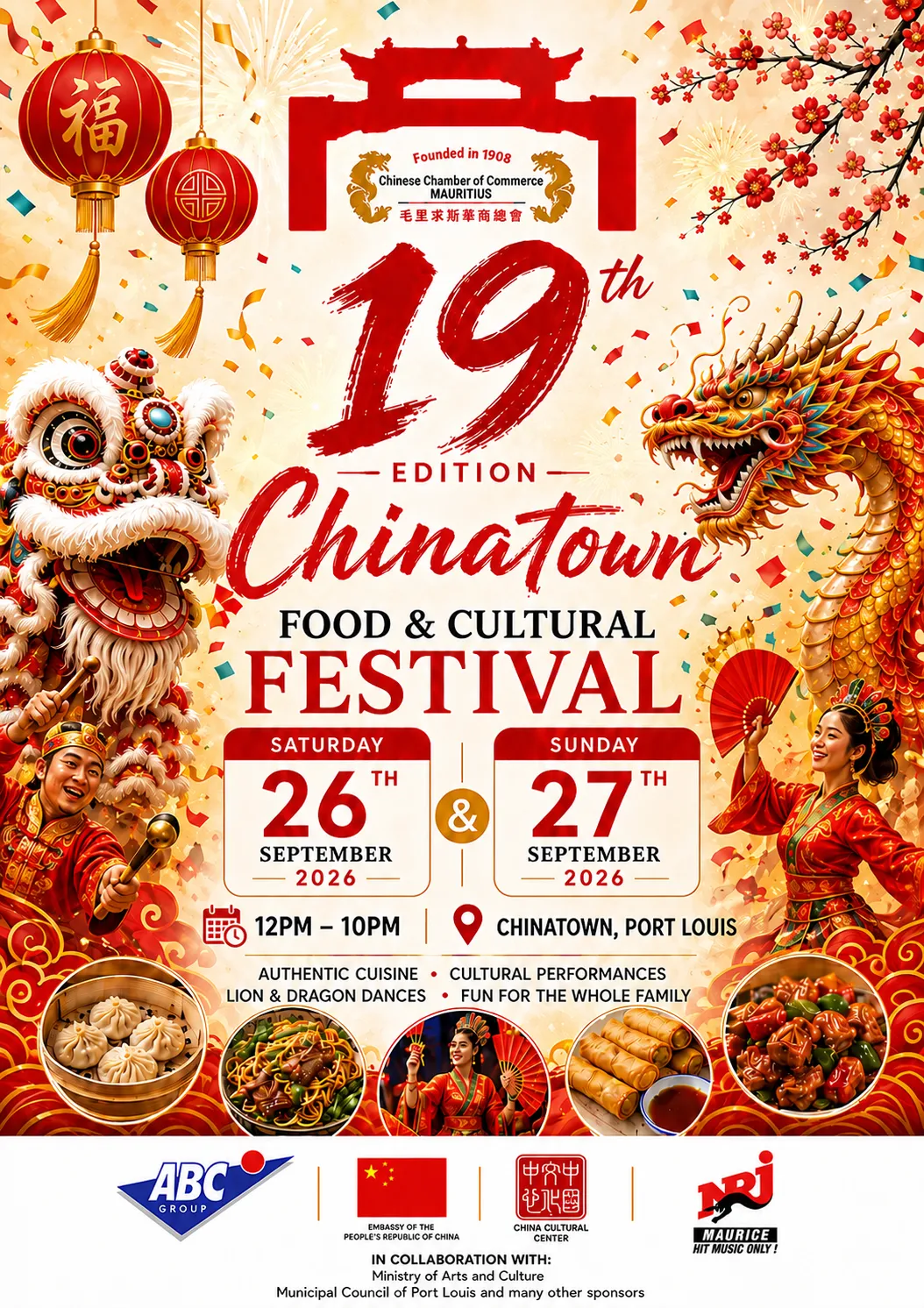
The festival is under the auspices of the Ministry of Arts and Culture, the Chinese Embassy, the China Cultural Center, and the Municipality of Port Louis. The ABC Group is the main sponsor, as it has been for over a decade.
Two stages and street performances
Eighteen groups will take turns performing over the weekend on two stages: the Main Podium, installed outdoors, and the Heen Foh HallThe two Venues operate alternately, so the same show is often performed twice in the evening, first in one location and then the other. there's no Need to rush: what You miss on one stage is usually made up for on the other an hour later.
In addition to this, there are street performancesThese are often the best part of the festival because they take place in the middle of the public. They are held at the junction of Dr Joseph Rivière and Léoville L'Homme streets, at Heritage Court on Emmanuel Anquetil Street, on Arsenal Street, and in front of Heen Foh Hall.
Saturday, September 26
The lions and dragons of the Dragon & Lion Dance Federation kick off the festivities in the streets at 2:30 p.m., even before the official opening. Dignitaries arrive at 3:00 p.m., and the opening ceremony takes place at 3:30 p.m., punctuated by firecrackers. This is followed by a grand dragon and lion dance demonstration until 4:15 p.m.
After a break, the shows resume at 5 p.m. and continue without interruption: traditional Chinese music, singing, dancing, saxophone, contemporary dance. Saturday ends with a the finale will feature lion and dragon dances, from 9:30 p.m. to 10 p.m., on the Main Podium.
Sunday, September 27
The stalls and shops open from noon, but the scenes start much later: street performances begin at 4 p.m. with the Wuji Cultural Group and the Chinese Wushu & Lion Dance Association, and the stages come alive from 5 p.m. with a dragon dance performance.
The day features a greater emphasis on martial arts—wushu, taiji qigong—and includes a fashion show by the Tracy Dance Group. The final performances conclude around 9 p.m., with the following hour dedicated to stalls and restaurants.
The highlights, hour by hour
Saturday, September 26
- 2:30 PM — first lion and dragon dances in the streets, even before the opening: junction of Dr Joseph Rivière and Léoville L'Homme streets, Heritage Court on Emmanuel Anquetil Street, Arsenal Street
- 3:30 PM — opening ceremony and fireworks, on the Main Podium
- 3:45 PM – 4:15 PM — Grand dragon and lion dance, on the Main Podium
- 5 p.m. — Resumption of performances featuring traditional Chinese music from the School of Chinese Music, on the Main Podium
- 5:50 PM — Lions and dragons will once again parade through the streets, at Heritage Court and in front of Heen Foh Hall
- 7:50 PM — lion and dragon dances at the Heen Foh Hall
- 8:30 PM — Lion and dragon dances on the Main Podium, followed by Hakka and Dai dances and songs from the Tracy Dance Group
- 9:30 p.m. – 10:00 p.m. — final with lion and dragon dances, on the Main Podium
Sunday, September 27
- 12 p.m. — Opening of stalls and shops
- 4 p.m. — street dances with the Wuji Cultural Group and the Chinese Wushu & Lion Dance Association
- 5 p.m. — Dragon dance performance, on the Main Podium
- 5:25 PM — fashion show and dances by the Tracy Dance Group, on the Main Podium
- 6 p.m. — wushu and taiji qigong at Heen Foh Hall, followed at 6:15 p.m. by a lion dance
- 8:15 PM — dragon dance at the Heen Foh Hall
- 8:25 PM — wushu and taiji qigong on the Main Podium
- 8:45 p.m. – 9:00 p.m. — the lion's final dance of the festival, on the Main Podium
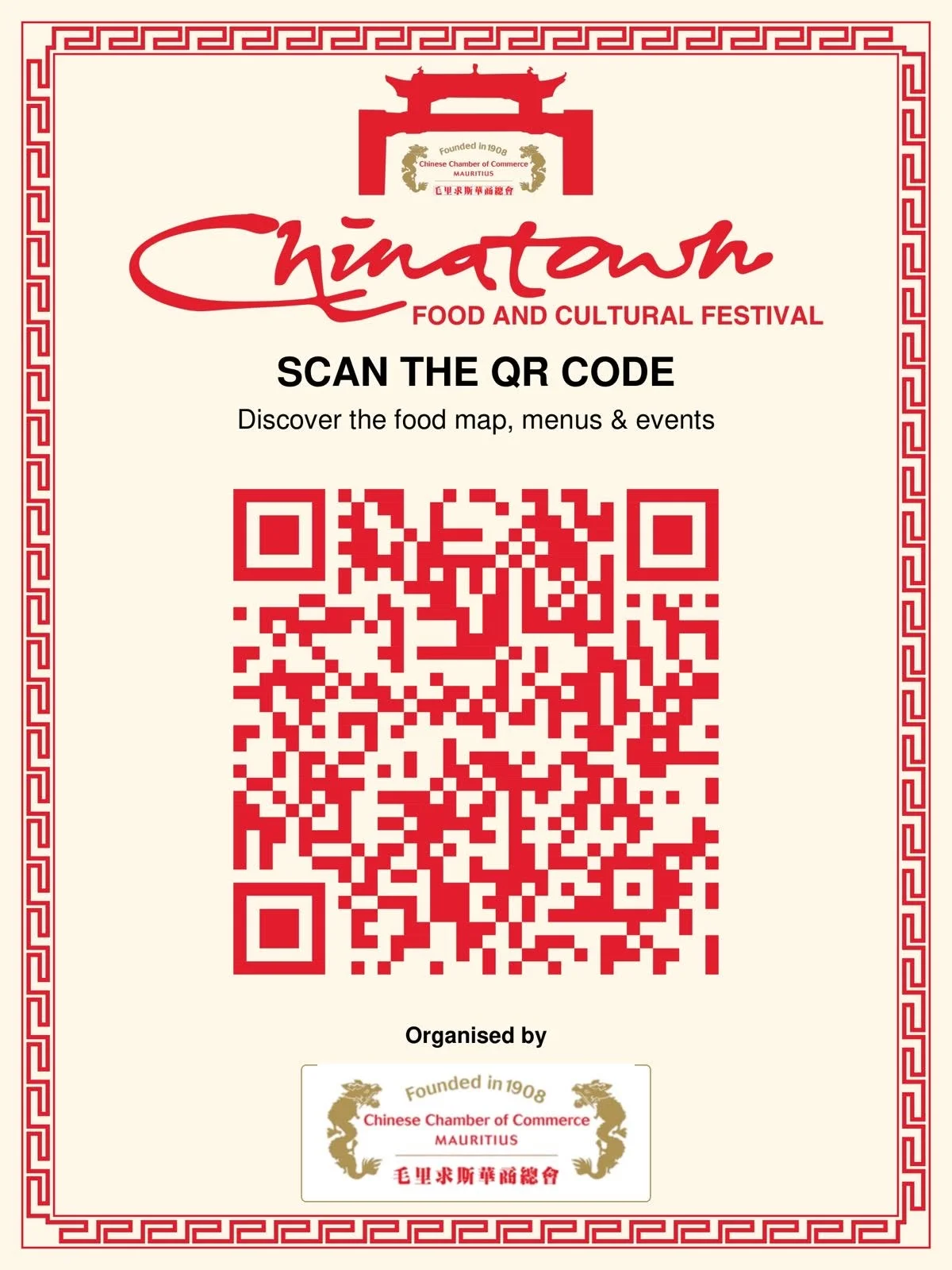
Between these highlights, the two stages feature a mix of singing, music, contemporary dance, And saxophone. full details, group by group, are available on the app launched by the Organizers: chinatown-festival.vercel.appOn site, QR codes displayed in the neighborhood link directly to it.
What's happening in the streets
The festival combines street performances, stages set up in the neighborhood, and activities in shops. More than 300 artists participated in 2025, with an expected attendance of between 80,000 and 100,000 visitors over the weekend.
The Lion and Dragon Dances
This is the heart of the event, and what everyone comes to see. The lions—two dancers in costumes with large articulated heads—parade through the neighborhood to the sound of drums and cymbals, stopping in front of shops, sometimes climbing onto benches or poles. The dragon, meanwhile, is carried by several people on poles and undulates the entire length of a street. Expect firecrackers: they are part of the ritual and surprise children who aren't expecting them.
In 2025, a Lion Dance Academy supported by Mauritius Telecom offered the public free introductory lion dance lessons. It is unclear at this stage whether it will continue in 2026.
Martial arts, music and calligraphy
The program also features demonstrations of wushu, traditional and modern dances and music, and Chinese calligraphy. Troupes from China have participated in several editions, alongside Sino-Mauritian cultural associations and clubs on the island.
The competitions
In previous years, sunday afternoons were traditionally dedicated to pageants: Little Miss Chinatown, Miss Teens, Best costume, and a talent show open to the public. a Great time to aim for if you're coming with family.
Eating at the festival
Food is not just an afterthought at the festival, it's half of what it is. Stalls are set up in various locations around the neighborhood, local chinese restaurants remain open, and shops bring out their specialties.
Here you'll find Sino-Mauritian cuisine as it's eaten on the island—boiled and fried noodles, dumplings, steamed buns—alongside more distinctly Chinese dishes served by caterers and guest chefs. To understand how far this cuisine has spread across the island, well beyond Chinatown, see our page on mauritian gastronomy.
Each edition brings its own New Features. in 2026, the organizers announce the arrival of mochi, these japanese bites made from glutinous rice, and kebabs, alongside the ever-popular fried noodles and dumplings.
The map of the stands can be viewed on the festival's app. chinatown-festival.vercel.appWhich allows you to search by preference and locate each stand on the neighborhood map.
Bring cash in small denominations: not all street stalls are equipped for credit cards.
Why does the date change every year?
The Chinatown Festival doesn't have a fixed date, and this is a classic pitfall for those planning their trip in advance. It was long held in April or May, moved to October in 2025, and is now held at the end of September in 2026. Many French-language websites still publish "traditionally in April": this information is no longer accurate.
Unlike Chinese New yearThe Chinatown festival, which follows the lunar calendar and falls between late January and late February, is freely determined by its organizers each year. The only consistent rule is that it takes place over a weekend, Saturday and Sunday.
The practical consequence: if you are reading this page for a year other than 2026, do not copy the dates. Check with the Chinese Chamber of Commerce or consult our calendar of events in MauritiusWhich we keep updated throughout the year.
Getting there and getting organized
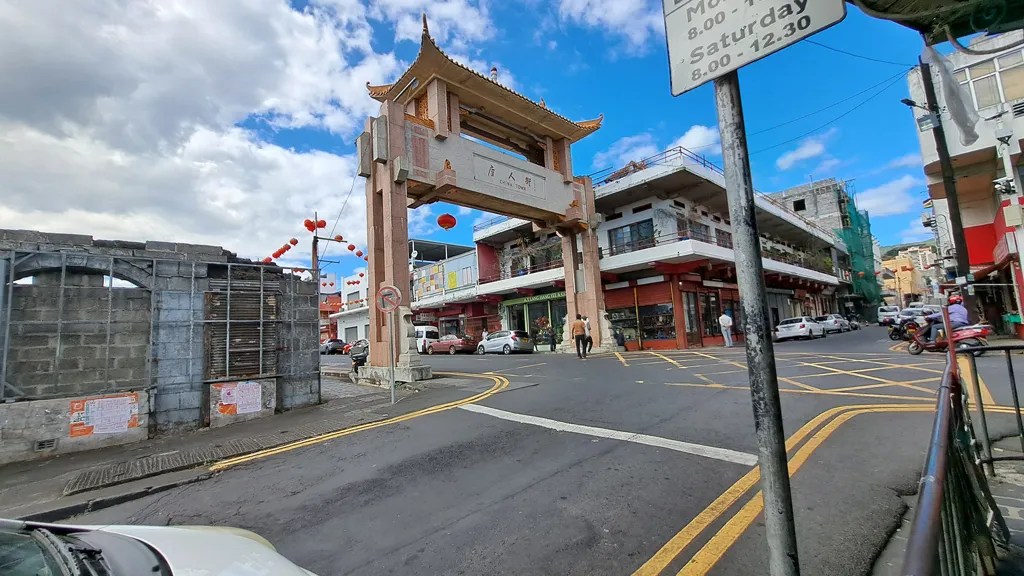
Chinatown occupies a strip of approximately 500 meters along Royal Street, in the center of Port Louis, between the central market and the Champ de Mars. A Chinese gate marks the entrance to the district, a second one its other end: they are the simplest landmark to know that you are there.

Stone arch marking the entrance to Chinatown in Port Louis
By car
During the festival, the streets of the neighborhood are closed to car traffic: you explore them on foot, which completely changes the experience. You'll need to park on the outskirts, in one of the parking lots in the center of Port Louis, and then walk the rest of the way. Allow plenty of time for parking: on a festival Saturday, with tens of thousands of visitors expected, parking spaces in the center fill up quickly.
By bus or taxi
Port Louis is the hub of the island's bus network, with the Victoria Square and Immigration Square stations both within walking distance of Chinatown. It's by far the easiest option if you're staying in the north or central part of town. However, be aware that evening services become very infrequent, and the festival continues until 10 pm. Plan accordingly. taxi to get in, negotiate the price before getting on, as is the case everywhere in Mauritius.
Bringing children
The festival is family-friendly and well-suited for an outing with children: vibrant colors, costumes, Drums, and delicious food. however, There are two Caveats. the crowds are dense during performance times, and the firecrackers from the lion dances are loud and sudden. With young children, the afternoon is more comfortable than the evening.
Chinatown the rest of the year
If your trip doesn't fall on the right weekend, that's no reason to cross the neighborhood off your itinerary. Chinatown can be visited all year round, and the red lanterns remain strung above the streets even in the middle of July.
What strikes you first are the buildings: single-story commercial buildings with red-painted corrugated iron roofs, wooden balconies, and wrought-iron railings, their ground-floor shops opening directly onto the street. The signs still bear the names of the families who have owned them for generations, in Chinese characters and Latin script. Several of these shops are over a century old.
Chinese herbalist shops are worth a visit, if only for the aroma: dried plants, roots, mushrooms, and traditional remedies arranged in jars and drawers. You can go in without buying anything; no one will pressure you.
Street art
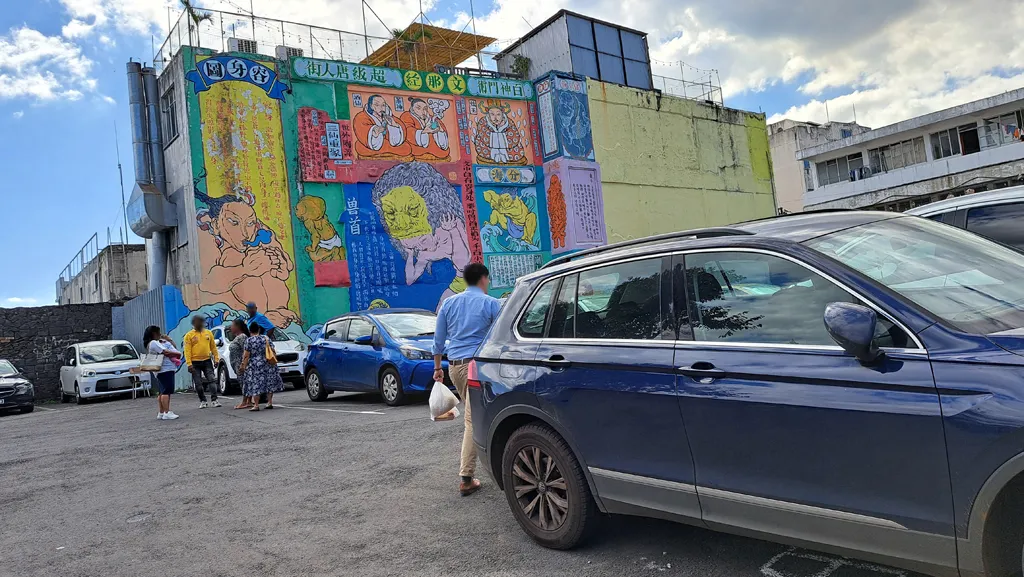
The neighborhood now boasts around a hundred murals, making it the island's highest concentration of street art. This initiative has a long history: the New Chinatown Foundation and the festival have been working since the 2000s to revitalize the area through urban art, with the participation of Mauritian and Chinese artists. Around fifteen houses on Arsenal and Emmanuel Anquetil streets were painted in 2018.
The murals are discovered by looking up and venturing into the side streets: some cover an entire gable end at the back of a parking lot, others are painted on the metal shutters of shops and are only revealed on Sundays, when everything is closed. Venpin Street is renowned for its walls dedicated to manga.
Large Chinese-style mural painted on a parking lot wall in Chinatown, Port Louis
To be combined on the same day
Chinatown can be visited in one to two hours, which leaves plenty of time to do other things. port louis central Market is a few minutes' walk away, the Caudan Waterfront barely further on, and the citadel overlooks the city just above. All these points are marked on our map of tourist sites and activities.
A neighborhood, a community, a chamber of commerce
Sino-Mauritians represent approximately 3% of the island's population. This is a small number, and their impact on daily Mauritian life is disproportionate to this figure: the local shop, the mine, credit extended to customers, and a portion of the Creole vocabulary.
An arrival date that no one is really setting.
Sources disagree on the arrival of the first Chinese in Mauritius. Some suggest 1630, others 1745, while still others place the first significant immigration in the 1820s, with arrivals from Guangdong, followed by the Hakkas. A final wave, between 1930 and 1950, is frequently cited. These versions are not necessarily mutually exclusive—a handful of isolated presences does not constitute organized immigration—but none is universally accepted, and we prefer to inform you of this rather than presume to decide for the historians.
What is established is that the neighborhood developed along Rue Royale around shops, and that it is one of the oldest Chinatowns on the African continent. For broader context, see our page on the history of Mauritius.
The Chinese chamber of commerce
The festival is organized by the Chinese Chamber of Commerce of Mauritius, founded in 1908. It supports local businesses, assists newcomers and struggling members of the community, and organizes several annual events, including the distribution of Foong Pao (Chinese sweets) during the Chinese New Year. The Chamber created the festival in 2005 with a specific objective, which successive presidents reiterate at each edition: to revitalize a historic neighborhood that was becoming deserted and to promote Chinese heritage to all Mauritians.
Places of worship
There kwan Tee PagodaFounded in 1842 on Kwan Tee Street, it is one of the oldest Chinese temples on the island. It is not in Chinatown, but it remains in Port Louis and can be visited year-round: a great way to extend your day.
Frequently asked questions about the chinatown Festival
When will the Chinatown festival take place in 2026?
The Chinatown Food & Cultural Festival 2026 takes place on Saturday, September 26 and Sunday, September 27, 2026, in the Chinatown district of Port Louis. Opening hours vary by day: Saturday from 3:30 pm to 10 pm, and Sunday from 12 pm to 10 pm. This is the nineteenth edition.
Is there an entrance fee for the Chinatown festival?
No. The festival takes place in the streets of the neighborhood, access is free, and there are no ticket offices. You only pay for what you consume at the stalls and restaurants.
Do I need to book in advance or register?
No registration is required to attend the festival. However, if you want to dine in one of the local restaurants rather than grab a quick bite, booking a table is advisable: these are the two busiest weekends of their year.
Is it possible to drive To chinatown during the Festival?
No, the area is closed to car traffic for both days. You have to park in the center of Port Louis and walk to Chinatown.
Does the festival take place in bad Weather?
Previous editions have taken place regardless of the weather, with some performances held under shelter. However, in the event of a cyclone warning or heavy rain, the organizers may modify the program: check the festival's Facebook page before traveling.
Is the Chinatown festival the same as Chinese New Year?
No, these are two separate events. Chinese New Year is a calendar holiday that falls between the end of January and the end of February and is celebrated throughout the island, including within families; it is also a public holiday in Mauritius. The Chinatown Festival is a cultural and gastronomic event organized over a weekend by the Chinese Chamber of Commerce, in the Chinatown district only.
How much time should I allow for the stay?
Two to three hours are enough to stroll through the streets, eat, and watch the dancing. If you're coming for the official opening and the big evening shows, plan for half a day and a late return.
The information in this article is for guidance purposes only. The author and publisher accept no responsibility for the accuracy of the information provided. The detailed program for the 2026 edition was not yet published at the time of writing: show times, announced activities, and access conditions are subject to change. Please check with the Chinese Chamber of Commerce in Mauritius or on the festival's official website before traveling. See the Terms and Conditions (Article 12).
Info:
7-day weather forecast
Rent a car
Book a hotel or villa
Buy a plane ticket
Frequently Asked Questions – FAQ
All tourist places and activities
Complete guide to SIM cards for tourists in Mauritius
Formalities and procedures for coming on holiday to Mauritius
All the complete guides
Bus routes: Click here
Your advertisement on this page?
Want to display an advertisement for your business on this particular page (or elsewhere on the site)?
Please contact us at clicking here.
Contribute, improve this page
We want to provide the most relevant and complete information to Internet users, so if you want to add or modify this page (text, photo, etc.), or even report an error, do not hesitate to contact us by sending us an email to the following address: contribuer@ilemaurice.im
(remember to clearly indicate the page concerned by your contribution)
(the photos sent will only be used to complete this page and will never be used commercially outside of this site without your agreement)