
Whale watching in Mauritius
Whale watching in Mauritius: the complete guide for a successful outing
 The essentials in a few words
Mauritius Lends itself to two types of observation. There humpback whale, seasonal visitor, meets june to november, with a peak between july and september.
THE sperm whale, he lives all year round off the west coast, which makes encounters possible outside of the humpback whale season.
The trips depart early in the morning from ports on the west coast, mainly Grande Rivière Noire, for 3 to 4 hours at sea.
Whale watching is done exclusively from the Boat: swimming with the whales is prohibited.
A successful outing depends on three things: the right time, a certified operator, and accepting a degree of randomness inherent in any encounter with wildlife.
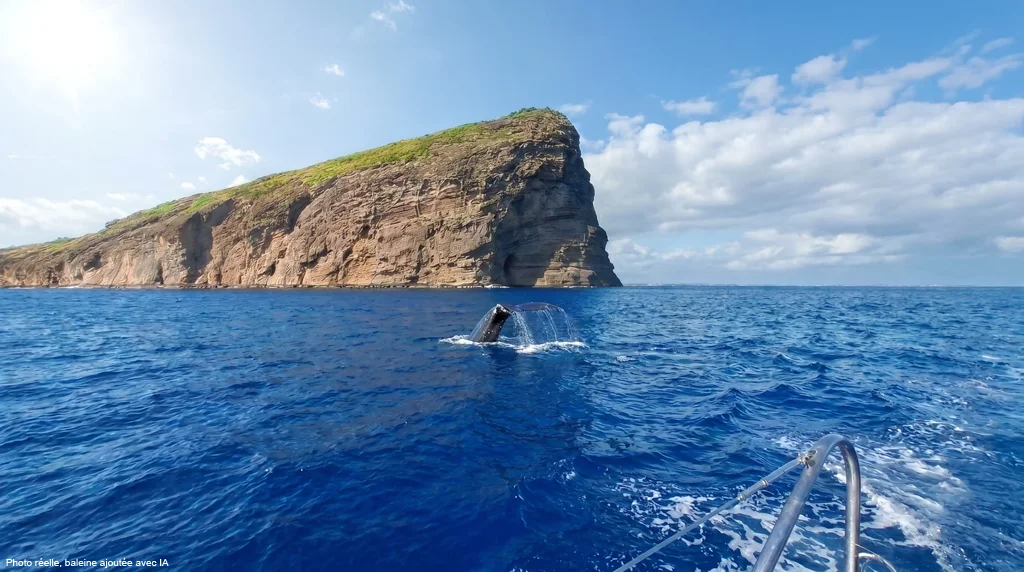
Every southern winter, the warm waters of Mauritius become the scene of one of the most moving spectacles in the Indian Ocean: the passage of humpback whales, coming from Antarctica to give birth and raise their young. Added to this is a rare feature in the world: the presence of sperm whales residing all year round off the west coast. Observing these giants evolve in their natural environment, listening to the breath of a whale tear the calm of the early morning, seeing a tail fin rise and then disappear: this is an experience that will leave a lasting mark on a stay in Mauritius.
This guide brings together everything you need to know before going to sea: what species to expect, at what time, from which spots, how an excursion takes place and how to experience it responsibly.
Summary
What whales can we observe In Mauritius?
The humpback whale, a spectacular seasonal visitor
The humpback whale is the star of the Mauritian southern winter. These impressive mammals reach up to 16 meters in length and weigh around thirty tonnes, and can be recognized by their very long pectoral fins and their heads covered in protuberances.
They are tireless travelers: they travel more than 5,000 kilometers from their Antarctic feeding grounds to reach the warm waters of the Indian Ocean, where they mate, give birth and care for their calves. It is also the most demonstrative species on the surface: jumps out of the water, fin slaps, and these complex songs that the males can last for around twenty minutes, repeated for hours.
The sperm whale, permanent resident of the Mauritian coasts
Unlike the humpback whale, the sperm whale is present all year round around Mauritius, which constitutes a rarity on a global scale. The largest toothed cetacean and largest marine predator, the male can exceed 18 meters and 50 tonnes. Its massive square head, which is up to a third of its length, is its signature.
A hunter of the depths, he tracks squid and fish several hundred meters below the surface. Its social organization is matriarchal: females and young form stable groups off the south and west coasts, with males only joining them intermittently. Another particularity: the sperm whale does not sing but communicates by series of clicking sounds, the “codas”, which are also used for echolocation and carry over several kilometers.
Other cetaceans
Beyond these two stars, outings regularly come across dolphins (blowers and long-beaks), and more occasionally pilot whales. In total, around ten species of cetaceans frequent Mauritian waters, a sign of the richness of this marine biodiversity. If you are particularly interested in meeting dolphins, it is subject to a specific framework: see our guide for swim with dolphins in Mauritius.
When is the best time to go whale watching?
Humpback whale season: June to November
The humpback whale watching period extends from June to November, with a peak between July and September. Females give birth in July then accompany their newborns until September-October, before beginning the long migration back to Antarctica.
These southern winter months generally offer calmer seas and good visibility. The scenes of calves swimming alongside their mothers are among the most touching that can be observed at sea. To situate this season in the overall climate of the island, consult our guide on weather and seasons in Mauritius.
The sperm whale, observable almost all year round
The permanent presence of the sperm whale makes it possible to envisage encounters outside the humpback whale season. Certain periods remain more favorable: the months of February, March and April are often cited as the most auspicious. In November, the sea is generally calm, but large males in search of mates travel long distances, which makes their location more uncertain.
Where to observe Them: the best spots
The west coast, playground of cetaceans
The west coast concentrates most of the outings, around Tamarin, Flic-en-Flac, grande Rivière Noire And off the coast of Morne Brabant. The reason is geographical: the seabed plunges quickly in the immediate vicinity of the shore. The boats therefore reach deep waters in a short time, where sperm whales usually roam and where humpback whales pass during their migration. This configuration makes the west coast a real observation corridor.
And from land?
Seeing a whale from a high point on the coast is not impossible, but it remains very uncertain and requires as much luck as good eyesight. The boat trip remains by far the most reliable method for approaching these animals in good conditions. Note that certain excursions from the north, such as the catamaran trip to the 3 northern islands, sometimes come across whales on the way, without being outings dedicated to observation.
What happens during a sea trip?
The typical procedure
Excursions depart early, around 6:30 a.m., when the seas are calmest and conditions are ideal for spotting cetaceans — with the added bonus of stunning sunrises over the ocean. The meeting takes place in one of the ports on the west coast, most often in Grande Rivière Noire. After a safety briefing and a reminder of the approach rules, we board suitable boats. An outing lasts on average 3 to 4 hours, depending on the location of the animals.
How skippers spot whales
Experienced crews combine several techniques. L'hydrophone allows you to listen underwater: by immersing the probe and directing the listening, you can detect the clicking sounds of sperm whales several kilometers away. L'breath observation is the other key clue: when coming up to breathe, the whales expel a plume of air visible from afar. Finally, the radio connects boats together and allows positions to be shared in real time, forming a valuable support network.
What to expect once you get there
Once the animals are located, the boat approaches slowly, respecting strict distances, and cuts or reduces its engine nearby to limit underwater noise. That's when the show begins: breathing, quiet movements, sometimes a jump, and for the luckiest, the suspended moment of a mother and her calf.
However, we must keep in mind that we are observing wildlife: although many operators have a success rate of around 90%, no outing can guarantee an encounter. Patience and acceptance of this hazard are part of the experience. Service providers generally provide life jackets and refreshments.
Practical tips for a successful outing
What to expect
- Light, comfortable clothing, plus a windbreaker: the early morning breeze can be chilly at sea.
- Hat or cap, sunglasses with cord, and sunscreen that respects the marine environment.
- A well-charged camera or smartphone.
- Enough to prevent seasickness if you are sensitive to it.
Good news for non-swimmers: since swimming with whales and sperm whales is prohibited, knowing how to swim is not necessary. Everything happens from the boat.
Book in advance
The activity is growing in popularity and places are limited (often 8 people maximum per boat). It is therefore strongly recommended to book several days in advance, especially in high season (July to September). Generally count between €60 and €100 per person, depending on the provider and the services included.
Choose a certified and responsible operator
The choice of service provider is decisive, both for the quality of the experience and for respect for the animals. Check that the operator has the certificate issued by the Tourism Authority of Mauritius (do not hesitate to ask to see it). Choose small, more discreet boats rather than large catamarans, and find out about approach practices. The best crews place the well-being of the cetaceans before satisfaction at all costs, and accept more distant observation when necessary. Finally, experienced skippers and guides, who know the behavior of the animals, considerably enrich the outing with their explanations.
Succeed in your photos
Activate burst mode to increase your chances of capturing the right moment, increase the shutter speed (1/500 minimum) to freeze the movement, adjust the ISO to the morning light and engage stabilization to compensate for body roll. A good optical zoom will help you compose despite safe distances. Remember to look up from the screen: certain moments are better experienced than photographed.
Responsible observation and regulations
Since November 1, 2012, cetacean watching has been regulated by the Tourism Authority (Dolphin and Whale Watching) Regulations 2012, since supplemented by the Fisheries Act 2023. Things to remember before boarding:
- Swimming, diving or snorkeling with humpback and sperm whales is prohibited (only scientific authorizations can deviate from this).
- Boats must remain at at least 50 meters from dolphins and 100 meters from whales — humpback whale like sperm whale —, with restricted zones extending up to 150 and 200 meters respectively. The approach is done slowly and laterally.
- All commercial operators must hold a certificate from the Tourism Authority, and the skipper a specific qualification.
- The number of boats that can approach the same group simultaneously is limited, and violations result in fines, withdrawal of certification, or even prosecution.
This summary covers the essentials for a peaceful outing. For complete details (law texts, distances, prohibitions, sanctions, turtle cases), consult our guide to regulations on observing and swimming with dolphins, turtles and whales. If you come across turtles during your outings, our dedicated article for observe sea turtles also specifies what is permitted.
Sustainable tourism and conservation
Why respecting animals is essential
Whale watching generates significant income, but it only remains viable if it respects wildlife. Cetaceans are animals sensitive to stress: an intrusive approach can disrupt their behavior, their reproduction and, in humpback whales accompanied by their young, the calf's breastfeeding and learning. It is precisely during this vulnerable period that we come to observe them, hence the importance of the rules of approach.
Awareness and research
The best operators don't just take people to see the whales: they explain the species, their migratory routes and the threats they face — pollution, ship strikes, climate change. This educational dimension transforms an attraction into real awareness of ocean protection.
Several local actors are working towards the conservation of Mauritian cetaceans. The Mauritius Marine Conservation Society (MMCS), active since the 1980s, is one of the historic organizations for the protection of the marine environment. Awareness campaigns carried out with the Tourism Authority - in particular by the Marine Megafauna Conservation Organization (MMCO) with the support of the United Nations Development Program - remind tourists and operators of good observation practices.
Towards a more qualitative approach
The growing success of the activity is also increasing pressure on cetacean populations, and disrespectful behavior is regularly reported. More and more voices are pleading for a more qualitative model: limiting the number of boats around the same group, strengthening operator training, and toughening controls and sanctions. As a visitor, the choice of an exemplary operator is the most direct lever to support this evolution.
Frequently Asked Questions
When is the best time to watch whales in Mauritius?
For humpback whales, from June to November, with a peak between July and September. The sperm whale, present all year round, can be observed outside this window, February to April often being cited as favorable.
Can you swim with whales in Mauritius?
No. Swimming, diving or snorkeling with humpback whales and sperm whales is prohibited by regulations. Observation is only from the boat. Knowing how to swim is therefore not necessary to participate in an outing.
Where do observation trips go?
Mainly from the west coast, especially from Grande Rivière Noire, but also around Tamarin, Flic-en-Flac and Le Morne. The seabed quickly becomes deep, which brings the observation areas closer to the shore.
How much does a tour cost and how long does it last?
Generally count between €60 and €100 per person, for an outing of 3 to 4 hours, often limited to 8 participants. Advance booking is recommended during high season.
Are we sure we will see Whales?
No. These are wild animals: many operators have a success rate of around 90%, but no encounter is guaranteed. A part of randomness is part of the experience.
How to choose a responsible Operator?
Check that it holds the tourism authority Certificate, Favor small boats, and find out about its approach practices. a Good operator respects the regulatory distances even if this implies observation from a further distance.
The information in this article (prices, times, periods, regulatory distances) is given for information purposes only and may change. Whale watching remains an activity in a natural environment, subject to sea conditions and the behavior of wild animals: no encounter can be guaranteed. Book with an operator holding a certificate from the Tourism Authority of Mauritius, follow the crew's safety instructions, and check the up-to-date conditions with the service provider before your trip. The author and publisher assume no responsibility for any decisions made on the basis of this information. See the Terms (Article 12).
(The photos you send will only be used to complete this page and will never be used commercially outside of this site without your permission)
It's very simple, just click on the button below.
Info +:
7-day weather forecast
Rent a car
Book a hotel or villa
Buy a plane ticket
Your advertising on this page?
Thank you for contacting us by click here.
Contribute, improve this page
(remember to clearly indicate the page to which your contribution relates)
(The photos you send will only be used to complete this page and will never be used commercially outside of this site without your permission)